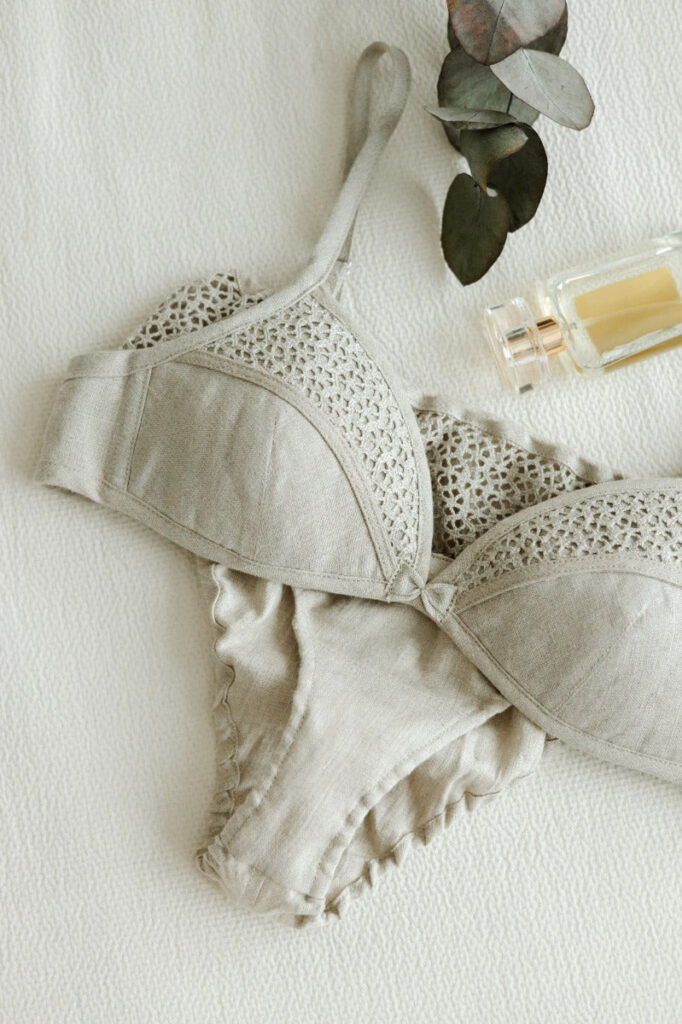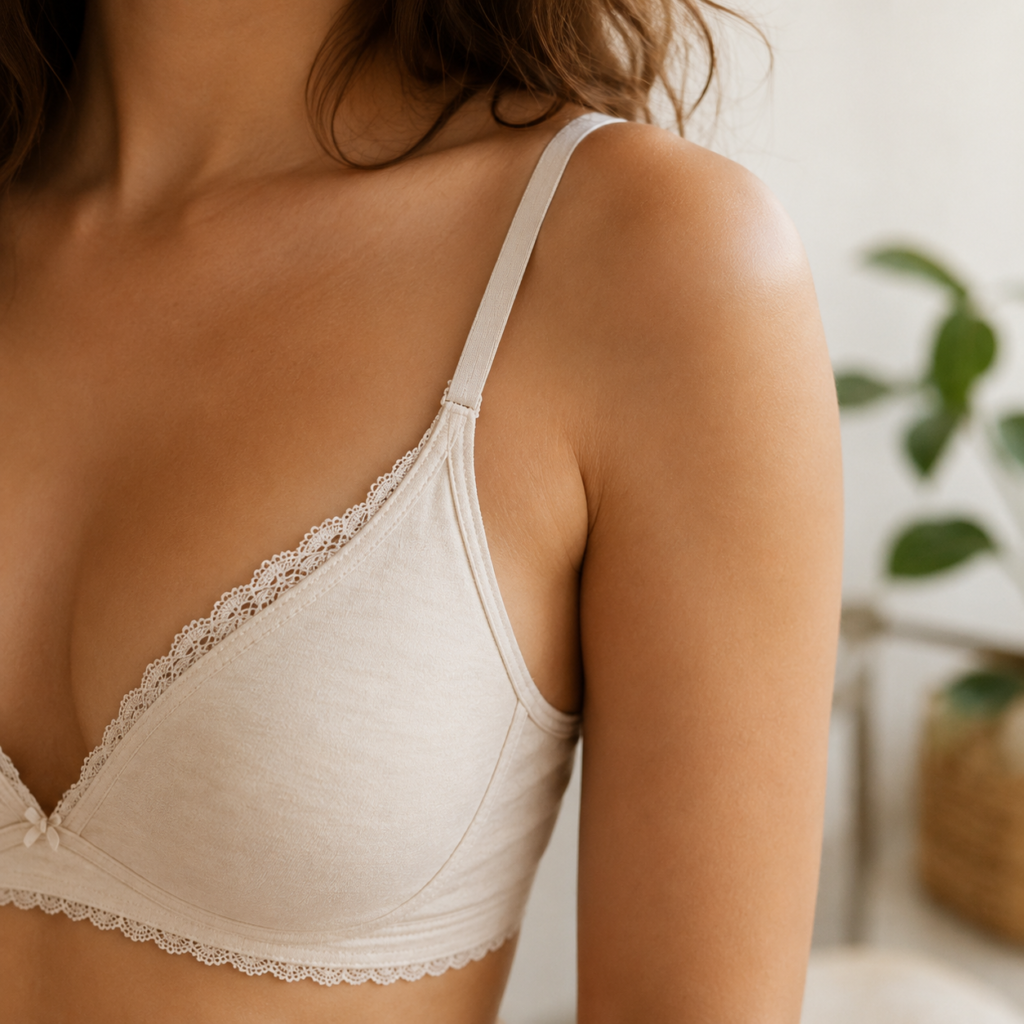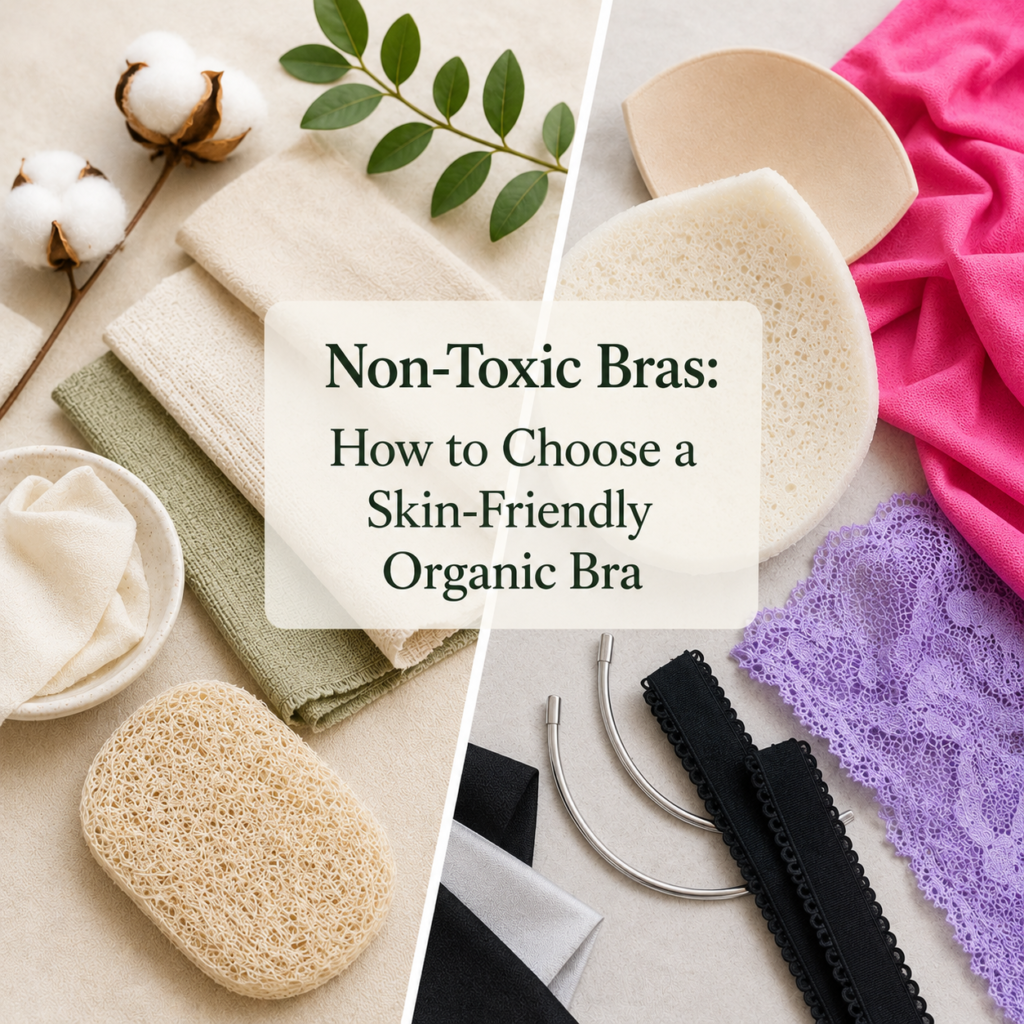
If you’re looking for a non-toxic bra, organic 100% cotton bra, or hypoallergenic bra for sensitive skin, here’s what actually matters. And what marketing labels often leave out.
In my previous article, I shared the dirty secrets of what’s really in your bra. The answer is not pretty, and it is no surprise that many women are irritated by their bra or unhappy to learn about the chemicals that could be released by your bra. It is difficult to find a REAL bra without all those irritants, and many companies use misleading headlines that do not paint the full picture.
Disclosure: Product materials and manufacturing can change without notice so check the product’s most recent description before making a purchase and buyer beware. This website uses cookies. By using the site, you consent to their use. This post contains affiliate links, which means that we may get a referral bonus at no cost to you which we use to keep the blog going.
How to Choose a Non-Toxic Bra
So… How can you select a less toxic bra? I did the research so you don’t have to. Here is your shopping checklist!
🔴 → Bad
🟡 → Better
🟢 → 🌿Totally Non-Toxic🌿
Choose Dermatologist-Recommended Natural Fibers:
Look at the product specifications to see what the fabric is really made of. Headlines like “organic cotton bra” often hide synthetic fabrics.
🔴 Synthetic fabrics / plastics: Avoid elastane / spandex, nylon, polyester, acrylic (recycled does not make it better for you). These fibers can break down with heat and sweat and release microplastics and chemical fragments onto the skin.
🟡 95% natural materials, 5% synthetics: Often called “cotton bras” but not really 100% natural. Don’t believe the headlines. These mixed synthetic+natural fabrics are better than fully synthetic, but they are still part plastic. Synthetic fibers have been woven in with the natural fibers to make it stretchy.
🟢 100% natural fabrics: Look for 100% cotton, linen, silk, hemp, bamboo viscose, or TENCEL™ (lyocell). Can be a mixture of these like cotton + hemp.
A note on certifications to look for:
🥈 OEKO-TEX® Certified = Tests finished textiles for harmful chemicals (like formaldehyde, heavy metals, and pesticide residues). Shouldn’t all products we use meet these standards?
🥇 GOTS Certified = Tests for harmful chemicals and requires organic fibers. Excellent because it’s organic plus strict chemical restrictions. GOTS helps ensure fewer residual chemicals by requiring clean practices from farm to finished product. It also has strong environmental and social standards.
Think Twice About Cups or Padded Bras:
There are almost no options for non-toxic cups or padding in bras. Most natural brands provide bras without cups because natural cups are so hard to find.
🔴 Regular cups: Avoid regular bra cups and padded bras. Most bra cups are made of polyurethane foam, which can release VOCs, PFAS (forever chemicals), and formaldehyde.
🟡 Removable cups or no cups: Bras with removable cups or no cups/padding can be a compromise.
Removable cups let you replace them with your own natural pads or cups. The best options for natural padding can be found on Etsy in linen, wool, silk, or cotton.
You can also wear a bra without cups, but many women complain that their nipples show through their shirt. Problem solved! My research has turned up the best organic cotton nipple covers for modesty when you are wearing a cotton bra or bralette to keep the headlights from showing.
🟢 Bras with cups made of 100% natural padding: Rare, but SO worth it! I found bras that have 100% natural padding and support. These bras provide the modesty and shape of a normal bra using natural linen or silk!
Choose a Bra with Safe Dyes and No Coatings:
🔴 No assurance of safe dyes on the product site is a major red flag. Words like “Moisture-wicking”, “Odor-resistant” or a slick/slippery fabric signal toxic coatings. Put a drop of water on the fabric: If it beads up, there may be a water-repellent finish. Sports bras are almost always coated.
🟡 Good = “No Azo dyes.” OEKO-TEX® Certified. These things signal that the fabric is less chemically treated, but the product could still hide some chemicals or plastics.
🟢 Exciting = GOTS Certified. “Undyed” or natural cotton color. Natural dyes like indigo or low-impact, hypoallergenic dyes. The gold standards! If you have a product with GOTS certificaiton or natural dyes, this strongly signals care and safety.
Azo dyes are synthetic dyes created to replace natural dyes. Because of health concerns, their use is limited in many countries. However they still comprise 60–70% of all dyes used in food and textile industries.
Other things to watch out for:
🔴 Nickel underwire, if you are sensitive to nickel. Nearly 20% of women are allergic to metals used in underwire, including nickel.
🔴 Bands and straps often have synthetic elastic edges. Fabric % usually refer to the main fabric only, so they don’t have to mention the synthetic band. These elastic bands can be very irritating since they are tight against your skin and experience a lot of wear and heat.
🔴 Lace and trim are often synthetic.
What is the best all-natural bra?
So, which bra should you get? I have just what you need in my review of the REAL skin-friendly, totally non-toxic bras.
Why is it so hard to find a non-toxic bra? Most bras have irritants, even if they are marketed as “cotton” or “organic.” Check out my article Are Pact Bras Really Non-Toxic.